A Nation in Motion: The Ordinary Americans Who Crossed Union Station's Threshold and Changed History
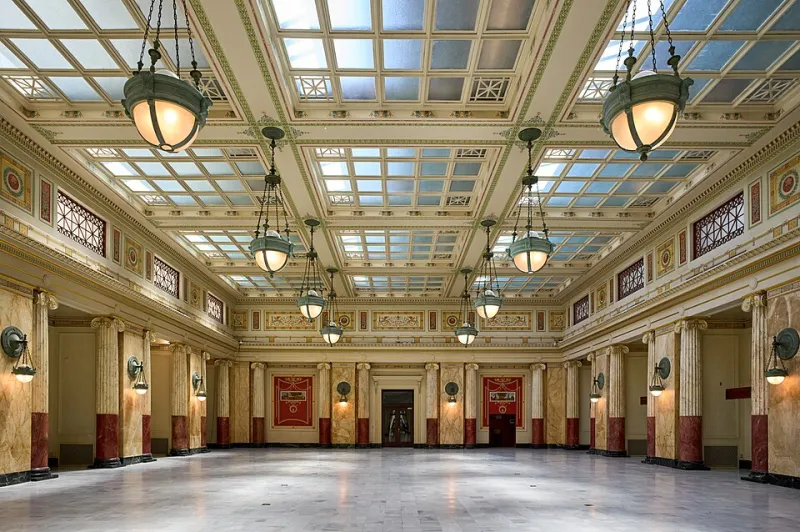
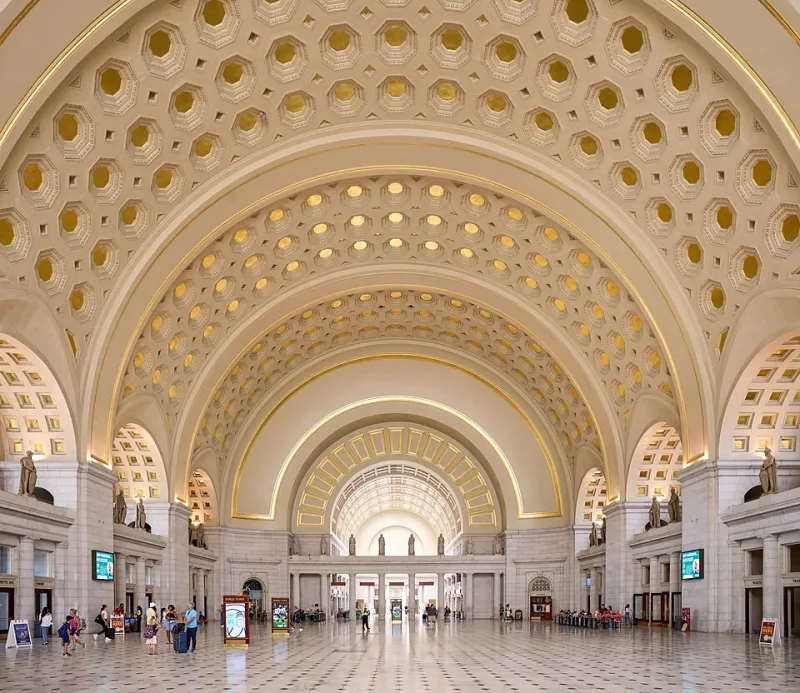
There is a particular quality of silence that settles over Union Station in the early morning hours, before the first commuters push through the bronze doors and before the coffee vendors lower their shutters. In those quiet moments, the rotunda seems to hold its breath—as though the building itself is aware of everything it has witnessed. The coffered ceiling, the Roman arches, the Ionic columns standing sentinel along the Main Hall: these are not merely ornamental choices. They are the permanent record of a nation that has repeatedly arrived at its own turning points inside these walls.
Union Station opened in 1907, and within a decade it had become something its architects could not have anticipated. Daniel Burnham designed a monument to civic confidence, a building scaled to imperial ambition. What history delivered, however, was something more intimate and more consequential: a threshold where the private lives of ordinary Americans collided, again and again, with the forces that were reshaping the country.
The Soldiers' Farewell
No chapter in the station's human history is more visceral than the two world wars. During the First World War, troop trains departed Washington with such frequency that Union Station functioned, in practical terms, as the nation's primary military gateway. Young men from the Midwest, the South, and the Eastern Seaboard converged here, many of them encountering the capital's grandeur for the first and, for some, the only time. Letters preserved in the Library of Congress describe the rotunda in terms that mix awe with apprehension—a cathedral-like space that seemed to demand a reckoning with the size of what one was about to undertake.
The Second World War intensified this dynamic considerably. Between 1941 and 1945, Union Station processed an estimated two hundred thousand passengers daily during peak periods. Photographs from the era show the Main Hall dense with uniforms, the faces of servicemen and women caught in the particular expression of people who understand that the next train may carry them somewhere they will never return from. The Red Cross maintained a hospitality booth near the east end of the concourse; volunteers dispensed coffee, sandwiches, and the kind of steady cheerfulness that required genuine courage to sustain.
For the families who accompanied these departures, the station's architecture took on an almost unbearable significance. The grandeur that Burnham intended as a statement of national strength became, in wartime, the backdrop against which private grief was compressed into public composure.
Passage During the Great Depression
The economic catastrophe of the 1930s produced a different kind of migration—less organized, less purposeful, and in many ways more desperate. Families who had lost farms in the Dust Bowl or jobs in shuttered factories arrived at Union Station carrying cardboard suitcases and the addresses of distant relatives. The station's waiting rooms, designed for the transient comfort of middle-class travelers, became temporary shelters for people whose journeys had no certain destination.
Archival records from the District of Columbia's social welfare agencies document the station's role during this period with quiet precision. Station staff, operating under instructions to maintain order without cruelty, navigated the difficult space between institutional obligation and human decency. Some travelers spent multiple nights in the waiting rooms before scraping together the fare to continue onward. The rotunda, built to project confidence in American prosperity, became instead a witness to its fragility.
What is remarkable, in retrospect, is how little the architecture itself seemed to diminish these visitors. Oral histories collected decades later by the Smithsonian Institution consistently describe the station's grandeur not as an affront to those who were struggling, but as a strange source of reassurance—evidence that something in the country had been built to last.
The Civil Rights Movement and the Station's Role in Coordinating Change
Perhaps the most historically underexamined chapter of Union Station's human story involves its role in the civil rights movement of the mid-twentieth century. Washington's position as the nation's capital made it a natural gathering point for activists, organizers, and ordinary citizens traveling to participate in demonstrations, congressional testimony, and the logistical work of a movement that required constant, coordinated movement across state lines.
The March on Washington in August 1963 brought an estimated quarter-million people to the capital, and Union Station served as the primary arrival point for the trains that carried participants from cities across the country. Eyewitness accounts describe the station filled to capacity hours before the march began, the rotunda echoing with conversation in accents from every region of the United States. For many participants, the journey through Union Station was itself a statement—an assertion of the right to move freely through the nation's most prominent public spaces.
The station's history with segregation is also part of this record. For decades before the civil rights era, Black travelers navigating Washington's rail hub encountered the same systemic indignities they faced throughout the South. The eventual desegregation of the station's facilities represented a small but meaningful victory, one that unfolded not in a single dramatic moment but through the accumulation of individual acts of resistance and institutional change.
Immigrants and the Weight of Arrival
Union Station also absorbed the arrivals of those who came to Washington not as citizens exercising a birthright, but as newcomers testing the terms of belonging. Immigrants arriving in the capital throughout the twentieth century—Eastern Europeans fleeing postwar displacement, Southeast Asians resettled after the fall of Saigon, Central Americans arriving in successive waves during the 1980s and beyond—passed through the rotunda carrying with them a different relationship to the building's grandeur.
For these travelers, the station's scale and ornament communicated something specific: that the country they had entered took its own aspirations seriously enough to build them in stone. Whether that impression proved accurate was a question that subsequent experience would answer. But the first encounter, beneath those coffered ceilings, consistently registered as significant. Community oral history projects conducted by local historical societies have preserved dozens of such testimonies, each describing the rotunda in terms that suggest it functioned as a kind of involuntary orientation—an introduction to the country's self-image before the harder work of integration began.
What the Building Holds
Union Station's restoration, completed in 1988 after decades of deterioration, returned the building's physical grandeur without erasing the record of everything the structure had witnessed. The marble floors, refinished and gleaming, are the same floors on which soldiers stood in 1917 and 1942, on which marchers rested in 1963, on which families from three continents took their first uncertain steps into an American future.
For visitors approaching the station today, whether arriving by train, emerging from the Metro, or simply walking through the main entrance on Massachusetts Avenue, the rotunda offers something that no digital archive can fully replicate: the experience of standing in a space where history accumulated not through deliberate commemoration, but through sheer human passage. The building did not choose its role. It simply remained standing, open, and large enough to hold whatever the country brought to its doors.
That, perhaps, is the most honest definition of a landmark: not a place where history was made, but a place where history could not avoid happening.